
Good Reasons
As early as the 1990s, the transport companies in the Rhine-Neckar region - MVV Verkehr, Verkehrsbetriebe Ludwigshafen, Heidelberger Straßen- und Bergbahn, Oberrheinische Eisenbahn and Rhein-Haardtbahn - began procuring customer-friendly low-floor vehicles.
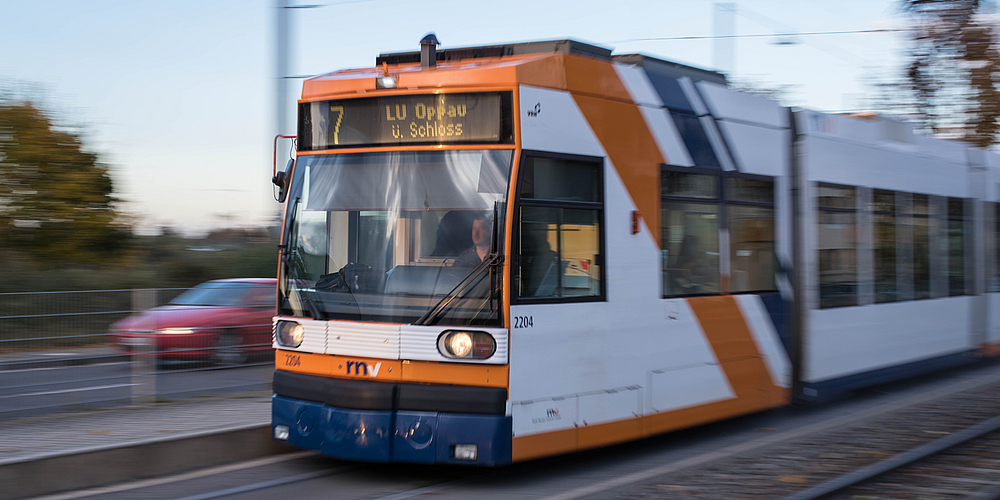
After around three decades in service, this first generation of low-floor vehicles is now reaching the end of its economically viable service life. The possibility of refurbishing the existing vehicles has been intensively examined and is not economically viable. The optimal solution is to decommission the vehicles and procure new ones.
Good Reasons For Purchasing a New One
On average, Rhein-Neckar-Verkehr GmbH transports around 549,000 passengers on a working day. Most of them use rail transport. Passenger numbers are rising steadily: more and more people are opting for environmentally and climate-friendly public transport for their mobility. This trend has also been observed in the rnv transport area for years. In order to take this development into account, the trams of the future should be able to transport more passengers at the same time - in a customer-friendly and barrier-free manner.
As passenger requirements for a customer-friendly and barrier-free means of transport have also evolved, it was also more economical and sensible to procure new trams for this reason. Passengers on the Rhine-Neckar Tram benefit from greater comfort, a new ambience and more space.
The benefits for rnv and the cities as shareholders and public transport authorities include more flexible deployment options, lower maintenance costs and optimised wear behaviour. With the procurement of the Rhein-Neckar-Tram, rnv is also preparing itself for the requirements of the numerous expansion plans and additional services that are being considered.

Modernisation, Network Expansion and Rail Bonus
Since the 1990s, the public transport infrastructure in the cities and the region has been consistently modernised and expanded. Other districts such as Lindenhof, Neckarau and Neuhermsheim in Mannheim, Kirchheim in Heidelberg and the railway city have been connected to the rail network and are now easily accessible by tram without having to change trams.
At the same time, important junctions and stops such as those at Heidelberg and Mannheim central stations are being expanded and extended. This will not only benefit commuters, students, trainees and schoolchildren. A strong public transport system also relieves inner-city traffic, as it offers a high-quality alternative to travelling by car. An interesting effect is regularly observed: Customers prefer to use rail transport even if there was already a good bus connection beforehand. The reason for this: Rail transport is perceived as faster and more comfortable. This is known as the "rail bonus".
The region is also investing heavily in track systems, platforms, signals and overhead lines: The double-track extension of Line 5 on the Bergstrasse between Heidelberg and Weinheim and the modernisation of the Rhein-Haardtbahn between Ludwigshafen and Bad Dürkheim are prime examples of how politicians, the administration, the old companies as infrastructure owners and rnv as operator are joining forces to make intercity transport services connecting cities attractive, modern, customer-friendly and economically efficient.
Air pollution control, CO2 savings and emission limits
Federal legislation has recognised the great importance of strengthening road and light rail transport and, not least in the context of the current debate on air pollution control, CO2 savings and emission limits, has significantly and sustainably increased funding for the expansion of rail infrastructure. In order to be prepared for these numerous planned expansions and additional transport services, the cities and rnv invested early on in a new, efficient generation of trams, the Rhein-Neckar-Tram.