

Accessibility
- Wide doors for easy boarding and alighting, even side by side
- Boarding and alighting at platform level
- Folding ramp to bridge the gap between the vehicle and platform
- Seats accessible at ground level in the door areas
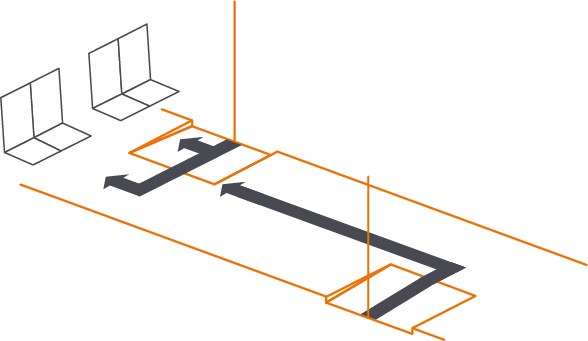
- Multifunctional areas for standing or parking: Wheelchairs and walking frames at the front, pushchairs and bicycles at the rear
- Intercom, stop request and door opening at an accessible height for wheelchair users
- Highly visible grab rails, loops and handles
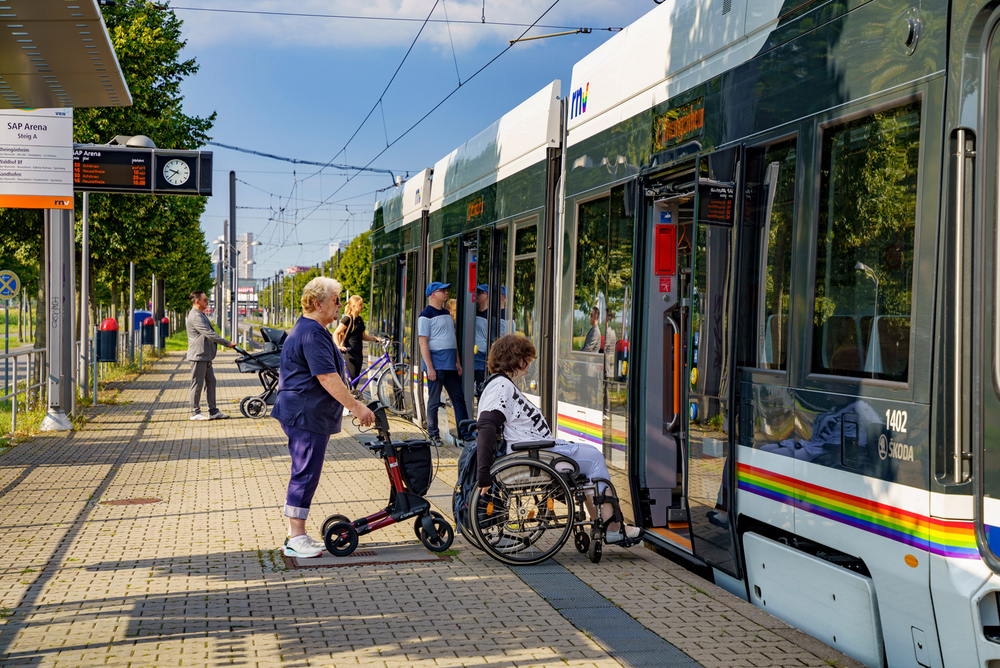
The Rhein-Neckar-Tram should also be as comfortable and accessible as possible for passengers with sensory and mobility impairments. This was taken into account from the initial preliminary considerations, through the tendering process to the finalisation of the technical and functional details, and taken into account as far as possible.
To this end, extensive experience from daily operations as well as legal requirements, principles and recommendations were incorporated. In addition, rnv entered into direct dialogue with passengers, interest groups and associations in order to jointly achieve the best possible vehicle with a good balance of all requirements.
Tips for using the RNT for people with reduced mobility
The interior concept includes large and easy-to-use boarding areas in a low-floor design, which allow comfortable and virtually step-free access to the vehicle if the platforms are suitably developed. The new swivelling/folding ramp offers a safe access option for passengers who need to bridge the gap completely and when stopping at platforms with a lower platform edge. This ramp is still operated by the tram driver and can be requested at the touch of a button.
There are four level-access seats for passengers with restricted mobility directly by the doors of the end carriages - at the front and rear. There are spaces for wheelchairs directly behind the doors of the front section of the vehicle. There is also an intercom for contacting the driver at a height suitable for wheelchair users, as well as a button for requesting a stop and opening the door.
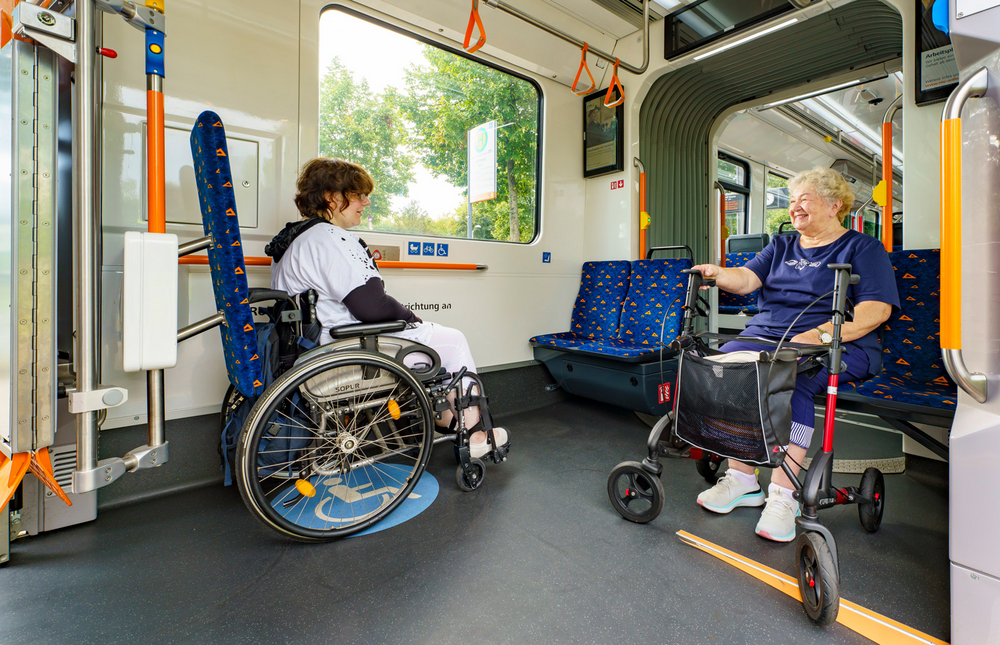
The multifunctional areas in the end carriages are designed to accommodate rollators, pushchairs and bicycles (only to be carried within the conditions of carriage of Rhein-Neckar Verkehr and Verkehrsverbund Rhein-Neckar) or as additional standing spaces.
The new trams' holding options are also suitable for everyday use and user-friendly. For example, handrails, loops and handles should be easy to reach and at the same time the passages in the vehicle should remain clear.
For users with impaired vision in particular, the brushed stainless steel grab rails have also been colour-coded to make them particularly easy to recognise.